This post-mortem is for the development of the game Crowd Control and building it for display at Netherworld. There were many trials and tribulations in getting this game over the hurdle and showcase ready and I’m going to discuss that here. This game is currently being developed by Dragon Drop Games, in this team, there are two designers, a programmer and a graphics designer.
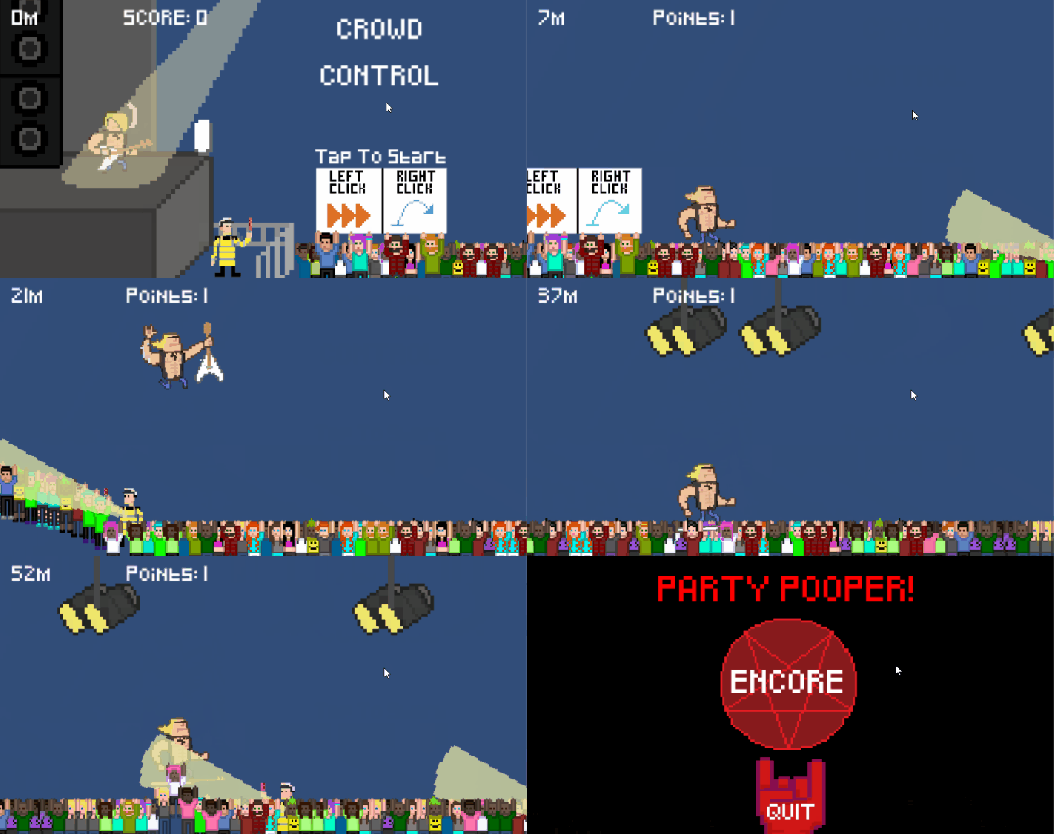
The game Crowd Control was first conceptualised in September during a Make-A-Thing where we build games off of three distinct keywords, mass, staccato and prolong. From these words, we thought that a crowd surfing game would be a really cool thing to create and went about creating the game over the next five days, what we ended up with was a game with not quite fully fleshed out systems or mechanics, great art and a whole lot of potential.
We had ideas for what we could do to improve the game and were all quite motivated to get it done, so we decided to sign up for a Netherworld showcase, this gave us a definitive deadline for when the game needed to be ready by. However, the main oversight that we had was the fact that nobody wanted to be the project leader, nobody wanted the responsibility to assign people tasks and give other team members deadlines to complete tasks by. This became a problem as we approached the deadline as we all had tasks and kinda knew what we wanted to do but not really know what everyone else is doing and when it should be done by, so the work was extremely limited and unproductive. With one or two weeks left until the Netherworld showcase we needed to have a meeting, and the main focus of this meeting was who was going to be the project leader and what do we need to do to get the product ready.
Compromise and Getting Work Done
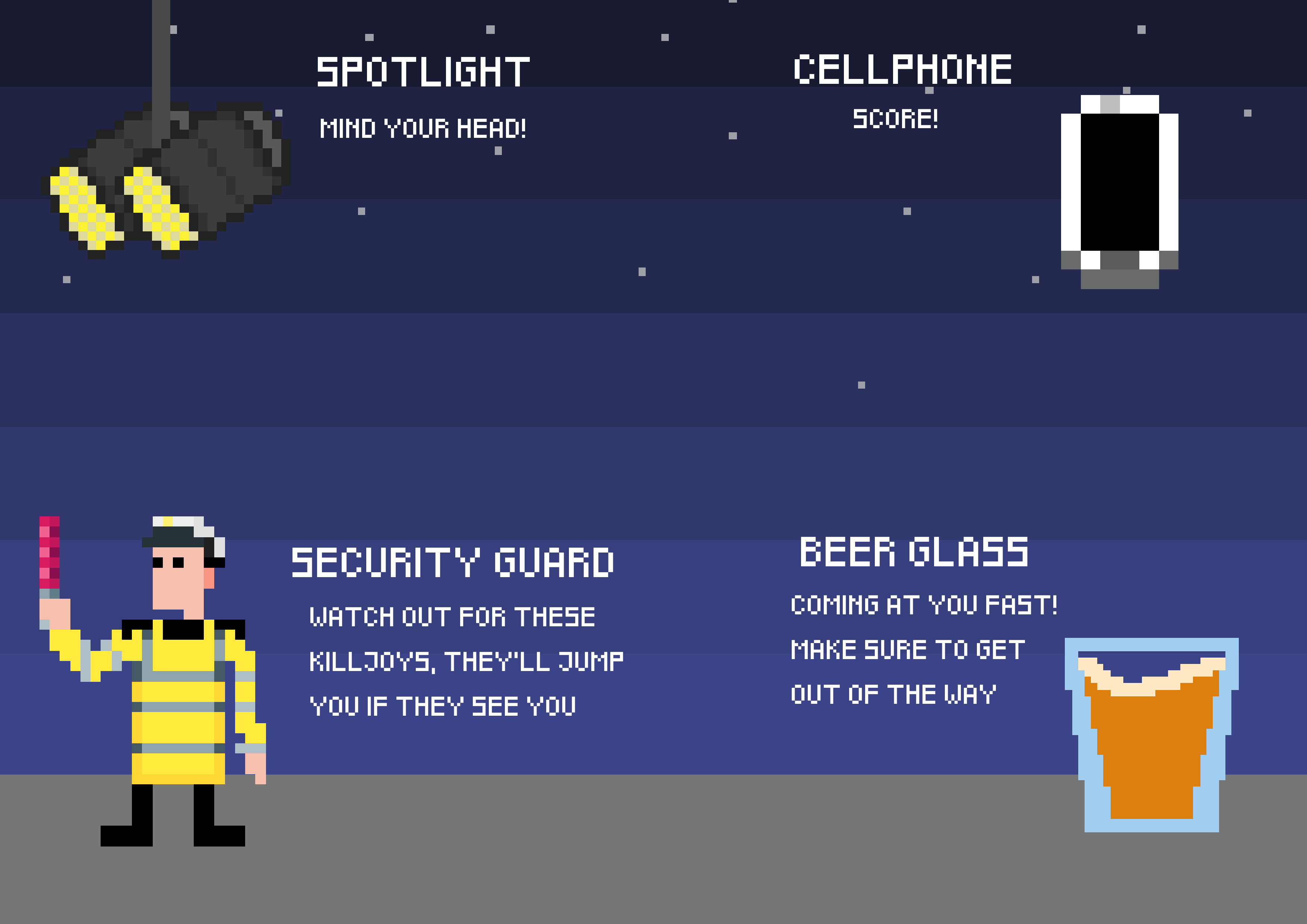
I decided to take on the responsibility of project leader and we immediately began delegating tasks, this included, fixing the player movement, getting the beer and phone sprites into the game and getting marketing up and running. By having a project leader, it allowed people clearly know who is doing what in the project and it also allows the team members to focus solely on getting their task complete. So now we were getting changes and fixes done at a much higher rate, this may have been due to the deadline being so close, but having task clarity was also helpful. One of the problems we encountered was that the graphics designer had way too much work on her plate, she was working on the logo but we also wanted business cards and a poster, this was just not possible with the time frame we were working with. So we decided to come up with a different solution, instead of a poster we would have a small instructions page which details out the elements of the game and instead of a fully fledged business card, we would have a QR card with our logo that linked to our Twitter account.

Conclusion
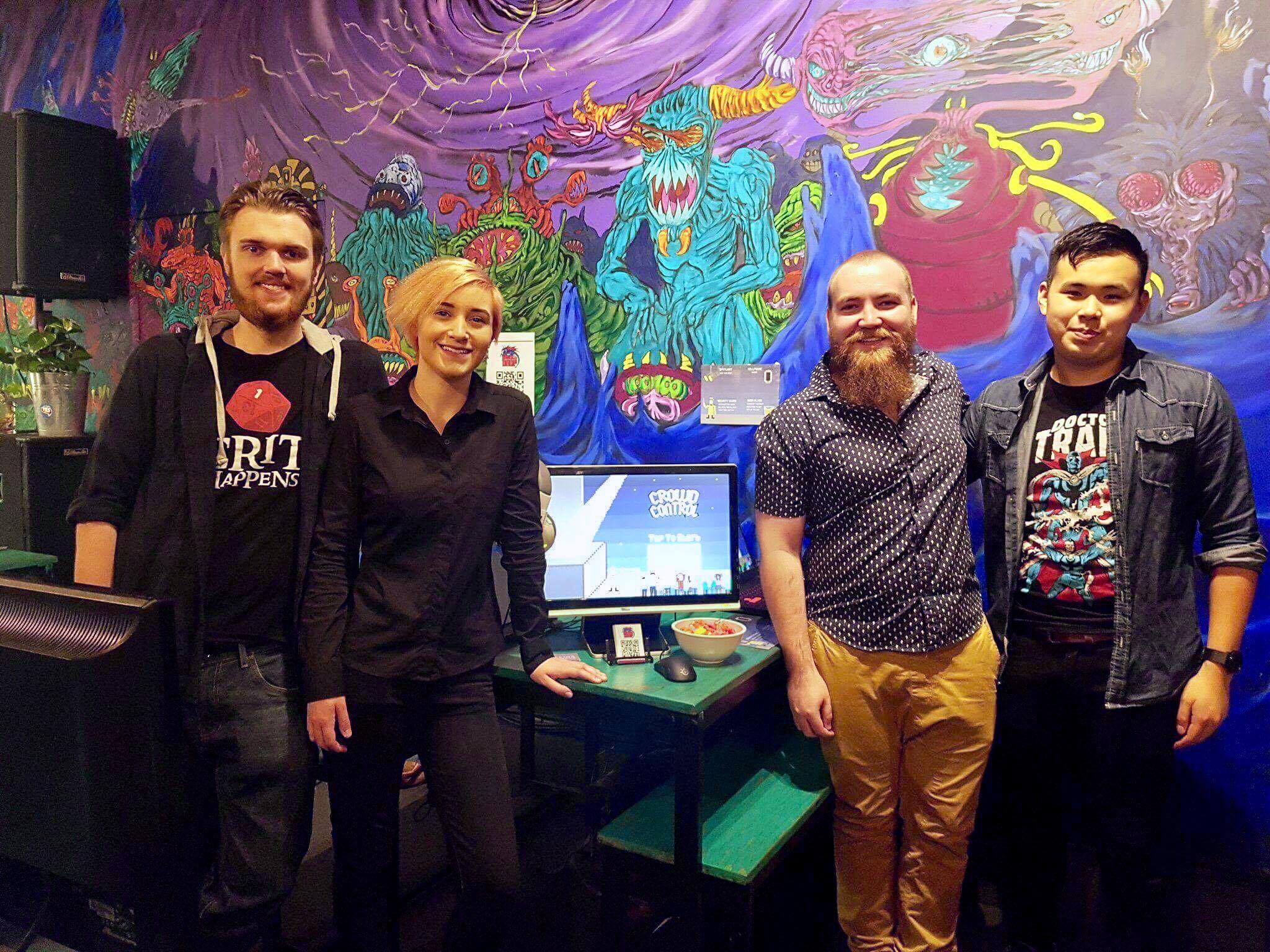
Overall, the night and the showcase went extremely well and the lesson has been learnt about the importance of project structure. Setting a goal and deadline for yourself is extremely important otherwise the game will never get released, however, creating a plan and having milestones leading up to then is a vital aspect to keep on schedule. A flat project structure where everyone is self-motivated and highly communicative is not very realistic and unsustainable but, having a project leader allows everyone to focus on their own individual responsibilities and keeps everyone on track.

Leave a comment